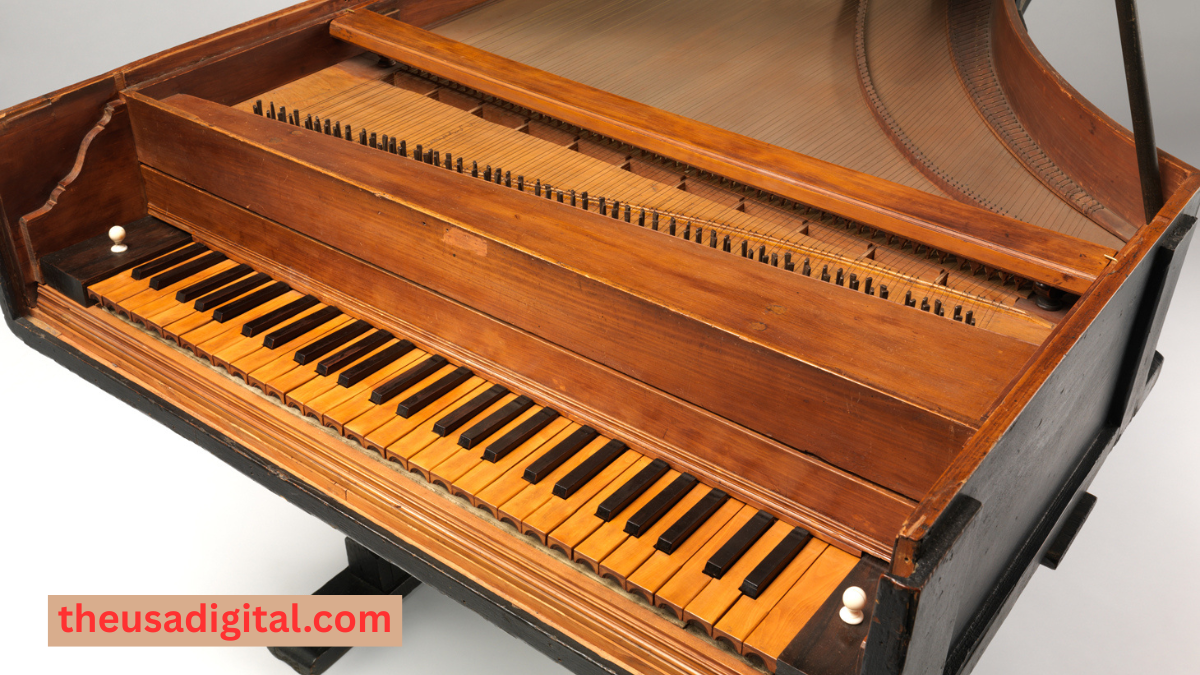
The oldest piano represents one of the most significant breakthroughs in the history of music. Before its invention, musicians were limited to keyboard instruments like the harpsichord and clavichord, which lacked true dynamic expression. The earliest piano introduced the revolutionary ability to play both soft and loud notes depending on how the keys were struck, changing musical composition forever. This innovation laid the foundation for modern musical expression and performance.
When people refer to the oldest piano, they are usually talking about the earliest surviving instruments created in the early 1700s by Italian inventor Bartolomeo Cristofori. These instruments were not only mechanical marvels but also artistic creations that reflected the craftsmanship of their time. Today, they are preserved in museums and collections, offering a rare glimpse into the origins of the modern piano.
Studying the oldest piano helps us understand how music evolved from simple mechanical sound production into a deeply expressive art form. It also highlights how innovation in instrument design can reshape entire musical traditions. Without the earliest piano developments, many classical compositions and modern genres would not exist in their current form.
Origins of Keyboard Instruments Before the Oldest Piano
Before the creation of the oldest piano, keyboard instruments had already existed for centuries, but they worked in very different ways. The harpsichord, for example, produced sound by plucking strings, resulting in a consistent volume regardless of how hard a key was pressed. This limited emotional expression in music, making performances sound mechanically uniform.
The clavichord, another predecessor, allowed slight dynamic control but produced very soft sounds that were unsuitable for large performances. Meanwhile, pipe organs offered powerful sound but were too large and impractical for personal use. These limitations created a strong demand for a more versatile instrument that could combine expressive control with practical performance capabilities.
Musicians and instrument makers across Europe experimented with new mechanisms to solve this challenge. The idea of combining hammer-struck strings with keyboard control slowly emerged, setting the stage for the invention of the piano. This transition marked a turning point in musical history, bridging the gap between mechanical sound production and emotional musical expression.
The Invention of the Oldest Piano by Bartolomeo Cristofori
The creation of the oldest piano is credited to Bartolomeo Cristofori, an Italian instrument maker working in the early 1700s. Around 1700–1709, Cristofori developed what he called the “gravicembalo col piano e forte,” meaning a harpsichord that could play soft and loud sounds. This invention is widely recognized as the first true piano.
Cristofori’s design introduced a groundbreaking hammer mechanism that struck strings rather than plucking them. This allowed musicians to control dynamics based on touch, something no earlier keyboard instrument could achieve. His innovation also included an escapement system, which ensured the hammer would not remain in contact with the string, allowing clearer sound production.
Although the earliest pianos were not immediately popular, they were highly respected among musicians and composers who understood their potential. Over time, improvements were made to Cristofori’s original design, but his core concept remains the foundation of all modern pianos. The oldest piano is therefore not just an object but a symbol of musical innovation and creativity.
Characteristics of the Oldest Surviving Pianos
The oldest piano instruments that survive today are delicate examples of early craftsmanship. These instruments were built primarily from wood, with thin metal strings and handcrafted mechanical components. Unlike modern pianos, they had a lighter frame and a much softer sound projection, making them suitable for small rooms and private performances.
One of the most noticeable differences between the oldest piano and modern instruments is the keyboard range. Early pianos typically had fewer keys, limiting the musical scale that could be played. Additionally, the string tension and hammer mechanisms were less advanced, resulting in a softer and more intimate tone.
Despite their limitations, these instruments were highly expressive for their time. They allowed musicians to experiment with emotional dynamics in ways that were previously impossible. Today, surviving examples are carefully preserved in museums, where they are protected from environmental damage and studied by historians and musicologists. These instruments serve as a direct connection to the earliest days of piano development.
Evolution of the Piano from the Oldest Designs
The evolution of the piano after the creation of the oldest piano was rapid and transformative. During the 18th and 19th centuries, instrument makers began strengthening the internal structure to handle higher string tension, which allowed for a louder and more powerful sound. This led to the development of cast iron frames, which significantly improved durability.
As musical demands increased, the keyboard range expanded from just a few octaves to the modern standard of 88 keys. This expansion allowed composers to create more complex and emotionally rich compositions. The Industrial Revolution further accelerated piano production, making instruments more accessible to the middle class.
Famous piano manufacturers such as Steinway & Sons played a major role in refining the instrument into its modern form. The transformation from the oldest piano to today’s grand piano reflects centuries of innovation, combining craftsmanship, science, and artistic vision.
Cultural Impact of the Oldest Piano on Music History
The oldest piano had a profound impact on the development of Western classical music. Composers such as Mozart, Beethoven, and Haydn embraced the piano for its expressive capabilities, writing compositions that fully explored its dynamic range. This helped establish the piano as the central instrument of classical music.
Beyond classical music, the piano became a key instrument in salons, concert halls, and later in popular music genres. Its versatility allowed it to adapt to changing musical styles, from romantic compositions to jazz and contemporary music. The emotional depth made possible by the earliest piano innovations continues to influence musicians today.
The cultural significance of the piano also extends beyond performance. It became a symbol of education, refinement, and artistic achievement in many societies. The journey of the oldest piano from a simple experimental instrument to a global musical icon reflects its unmatched influence on human creativity.
Conclusion
The story of the oldest piano is a journey of innovation, creativity, and artistic transformation. From its origins in early keyboard instruments to the groundbreaking invention by Bartolomeo Cristofori, the piano has continuously evolved to meet the demands of musicians and composers. Its development has shaped centuries of music and continues to influence modern sound.
Preserving and studying the oldest piano is essential for understanding how music has developed over time. These instruments are not just historical artifacts but living reminders of human ingenuity and the endless pursuit of artistic expression.
